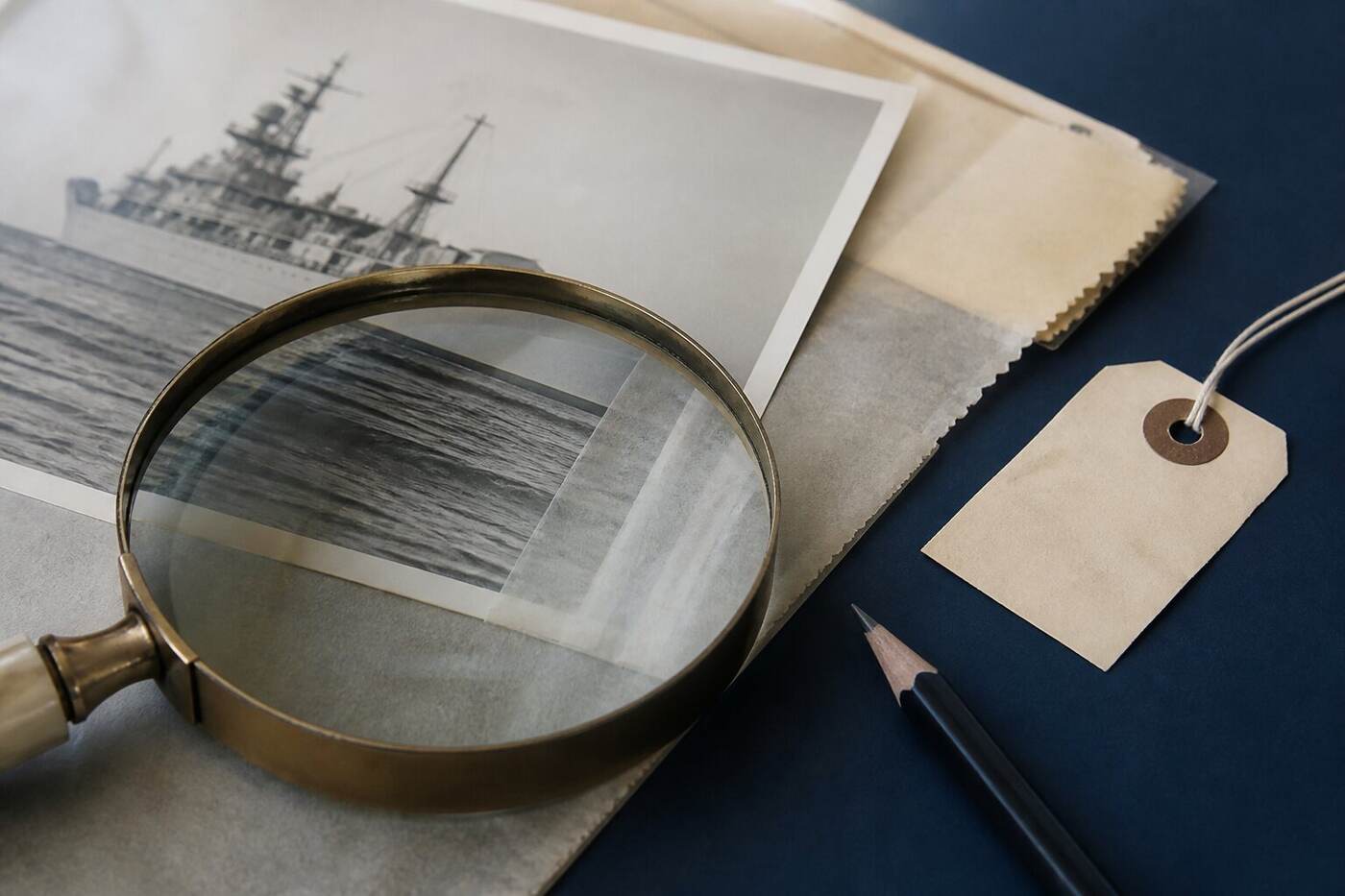
Provenance is a chain
A photo’s history can include a family scan, a former website, a museum catalog, an official collection and later copies. Write the chain down before selecting a crop or correcting a caption.
The caption is evidence, not decoration
Record the exact caption, its source and any catalog identifier. Then make a separate note about what the image itself shows. This gives later readers a way to understand why the identification was made.
Rights and history meet here
A public-domain government fact does not make every reproduction free to use. When rights remain unclear, use the source for identification and commission or generate a new explanatory visual instead of copying the image.
Start with the object now in hand
Record whether the item is an original print, negative, slide, photocopy, scan or downloaded image. Photograph the reverse, mount and envelope before separating anything. Dimensions, edge markings and handwritten notes may help distinguish an early print from a later copy even when the visible scene is identical.
Assign a local archive identifier that does not assume the ship, person or date. Preserve the supplied caption verbatim in one field and put the editor's interpretation in another. This keeps a correction from erasing the evidence of how the image first entered the collection.
Trace copies back through repositories
Search catalog numbers, caption phrases, crop boundaries and visible markings. A museum or government catalog may provide a creator, collection and date range. A former website snapshot may show when a copy circulated, but the snapshot is not automatically the earliest source or the rights holder.
Compare scans carefully. Different contrast or file encoding may hide that two pages use the same underlying photograph. Note identical scratches, dust and crop features. When the copies diverge, preserve both source trails instead of selecting the sharper file and discarding the path that explains it.
Rights and historical confidence are separate
An image can be confidently identified while its publication rights remain unresolved. It can also be lawful to reproduce while carrying a weak or incorrect caption. The archive should record identification confidence, source custody and rights status in separate fields so one decision does not silently stand in for the others.
When permission is unclear, the research can still use the item privately to generate questions and locate official records. Public pages can describe the evidence, link to an authorized repository or use a newly created interpretive raster. That preserves the history without presenting an unlicensed copy as a site-owned photograph.
Research worksheet
Put this method to work
A provenance graph can represent each known copy as a node and each scan, publication, donation or download as a dated relationship. Unknown links remain visible instead of being guessed. The graph helps identify which copy carries the earliest caption, which repository holds a master and where a crop first appeared. It also prevents the most visually attractive file from being mistaken for the original simply because its technical quality is higher.
Continue the research
Follow the evidence into the next question
Apply the chain to the Phoebe photo archive before attaching names.
Use the visual identification guide for hull and setting clues.
Protect the master files through the preservation checklist.
Return to the american baptist and southern baptist route.
Return to the dry garden buckwheat choice route.
Return to the 2011 transit counter ads route.