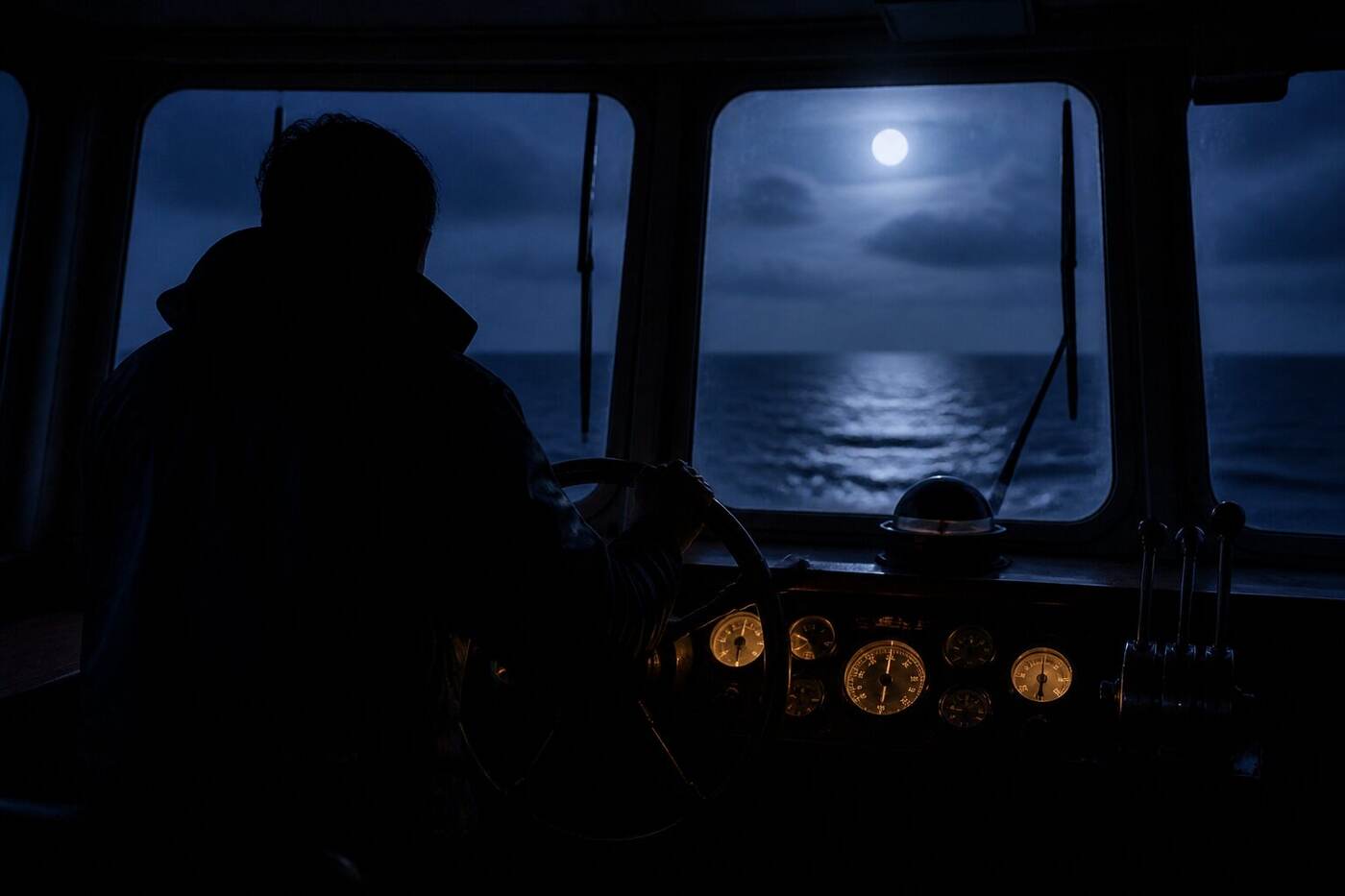
A watch is a recordable unit
Watchkeeping divides responsibility across time, place and task. Deck logs can preserve the formal outline of that system, even when they do not describe everything a sailor noticed or remembered.
Small ships make the arrangement visible
On a compact vessel, work areas, machinery and lookout responsibilities sit close together. That physical proximity helps a reader understand why routine, communication and handover mattered, without requiring an invented first-person account.
Research the ship, then generalize carefully
This guide explains the practice at a useful general level. To claim a particular watch bill or daily rhythm for Phoebe, a researcher would need the relevant logs or another source that names the ship and period.
The watch connects responsibility to time
A watch is an organized period of responsibility, not simply a shift in the modern workplace sense. Navigation, engineering and other duties could follow related but distinct schedules. The deck log records the official succession of events and watch officers, while a watch bill or division record would be needed to reconstruct individual assignments.
On a vessel with a listed complement of 39, staffing choices had consequences across the ship. People needed rest while the ship continued to navigate, maintain machinery and respond to operational demands. That makes watchkeeping central to understanding daily life, but the exact arrangement should not be reverse-engineered from complement alone.
Log formats shape what can be recovered
NARA explains that Navy deck logs from 1960 through 1964 used a revised columnar format that included weather, latitude and longitude, distance traveled and fuel information. A format change in 1965 altered those fields, and location information was not always completed. The absence of a coordinate can therefore reflect the form as used, not the absence of a watch.
By the 1970s, a six-column format commonly used one line per entry, and a monthly log could exceed 200 pages. Researchers should record the form, month and page with the transcription. A quotation detached from that context is harder to verify and may conceal whether it was a routine entry, a correction or a later annotation.
Move from entry to explanation carefully
A log entry can establish that a course changed, a port was entered or a formal event occurred. It may not explain why the change mattered to the crew. Personal recollection can add that perspective, but it should remain attributed and dated. Combining the sources does not mean blending their voices into one confident paragraph.
For Phoebe, watchkeeping research could eventually refine route and operation pages. The process begins with a narrow question and a bounded date range, then records exact page references. It does not begin by scanning for a dramatic sentence and building the surrounding day from imagination.
Research worksheet
Put this method to work
For a selected day, transcribe a full watch boundary before extracting the sentence of interest. Note the preceding and following entries, the officer line, corrections and any repeated abbreviation. This context may reveal that an event continued across watches or that a later entry corrected the first. The published prose can remain simple, but the research note should preserve enough of the page to make the interpretation reproducible.
Continue the research
Follow the evidence into the next question
Learn the record format through the deck-log reading guide.
Place formal watches beside the broader life-aboard evidence.
Use the oral-history checklist when a recollection explains what the log does not.
Open the april 30 reading celebration route.