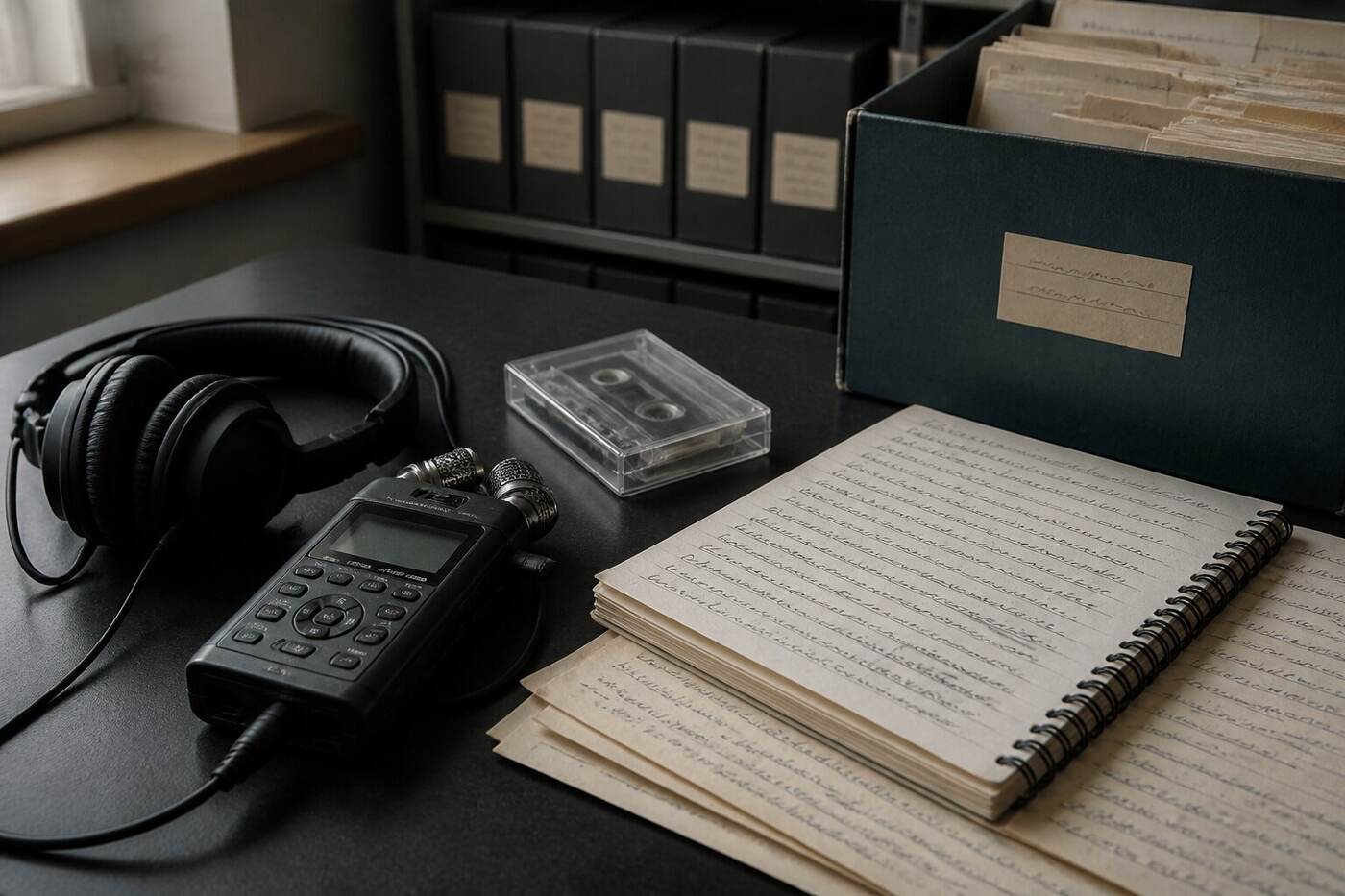
Ask what the recording can answer
Oral history is especially strong for perception, meaning, routine and change as remembered by a participant. It may be weaker for exact dates, complete rosters or events the speaker did not directly witness.
Build a provenance note
Record the speaker, interviewer, date, medium, original owner and permission status. A short provenance note protects the person and tells future readers why the account is being used.
Make corroboration visible
Compare the account with logs, muster rolls, photographs or command histories. Agreement can strengthen a claim, but disagreement can also be historically meaningful when it is described rather than hidden.
Describe the interview before using it
Record who conducted the interview, who spoke, when it happened, where the recording is held and whether a transcript exists. Note whether the conversation was contemporary with the event or recorded decades later. These details let a reader evaluate the source without reducing the speaker to a reliability score.
The interviewer's questions also shape the account. A prompted answer, a spontaneous recollection and a story repeated at reunions have different contexts. Preserve the question when it matters, and do not turn the interviewer's wording into the narrator's independent claim.
Break a recollection into checkable claims
A single passage may contain a date, place, ship movement, personal reaction and explanation of motive. Separate those elements in the research notes. The date may be checked against a log, the assignment against a muster roll and the equipment against a photograph, while the reaction remains valuable as personal testimony.
Corroboration should be described, not implied. If a deck log confirms the port but not the incident, write exactly that. If no independent record has been found, the account can still be published as attributed memory when permission and context are clear. The absence of corroboration is not the same thing as proof of error.
Preserve disagreement and later reflection
Two participants may remember sequence or emphasis differently. A useful edition can place the accounts beside each other and explain their dates instead of forcing a single composite story. Disagreement often reveals what each person noticed, what the community later repeated and which details require archival work.
Later reflection is itself historical evidence. A veteran describing an event after many years is also showing how that event was remembered in a later period. Labeling the date of recollection protects both values: the account can illuminate memory without being misread as a document created aboard ship at the time.
Research worksheet
Put this method to work
An interview review should include a short listening log, not only a transcript. Tone, hesitation, laughter and a long pause can matter, while automatic transcription may erase them or invent words. Mark the timecode of passages used and retain the audio format and checksum. A quotation can then be checked against the recording, and a future editor can distinguish the narrator's words from punctuation supplied during transcription.
Continue the research
Follow the evidence into the next question
See the editorial application in the Phoebe sea stories route.
Check administrative presence with the muster-roll guide.
Use the deck-log workflow when a recollection supplies a date or movement.
Use the baptist baptism by immersion explained route.
Open the children manuscript formatting route.