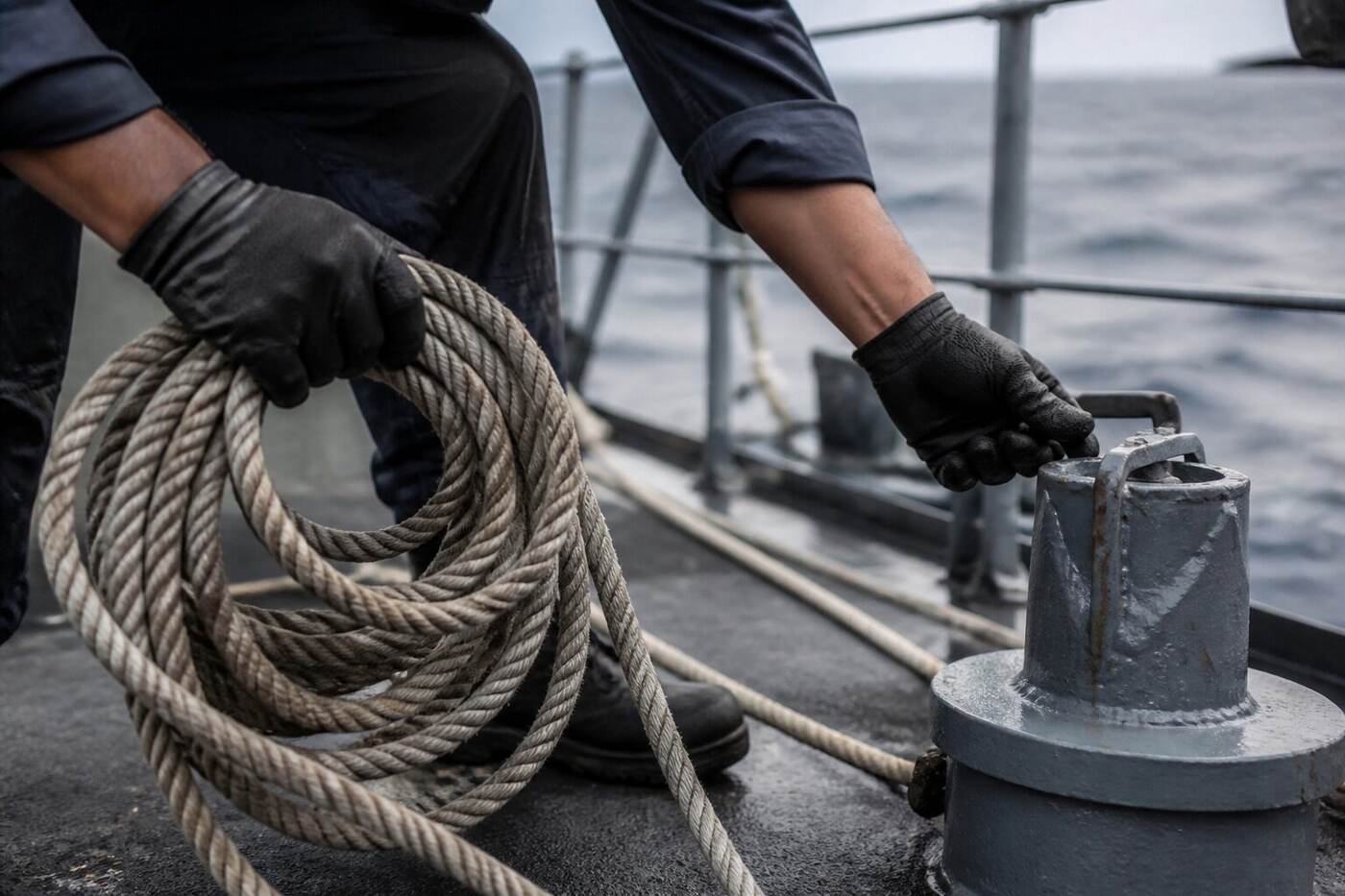
Routine leaves traces
Watch schedules, deck logs, equipment lists and photographs can reveal the shape of work aboard a small ship. They do not recreate every feeling or conversation, but they can anchor an account in things that were recorded.
Memory adds a different register
A recollection may explain what a task felt like or which detail stayed vivid. It should be presented as recollection, with its own date and provenance, rather than silently upgraded into a universal description of service.
Write with proportion
The archive deserves curiosity and restraint. A page about shipboard life can be warm without inventing a speaker, a meal, a joke or a weather detail that the surviving record does not supply.
A complement gives scale, not a full routine
The official ship summary lists a complement of 39. On a 144-foot vessel, that number immediately suggests shared space and overlapping responsibilities. It does not tell us who stood each watch, where every berth was located or how a particular day unfolded. Those details belong to watch bills, plans, logs and recollections with dates.
Daily work can still be approached through categories that leave records: navigation, engineering, maintenance, communications, food service, cleaning, drills and the handling of mine-warfare gear. A deck log may record formal events while photographs show clothing, tools or working positions. Neither record captures the whole day, but together they establish a defensible outline.
Small ships compress work and community
Limited space makes changes of watch, equipment movement and maintenance visible to more of the crew. A task in one compartment can affect circulation or rest elsewhere. That physical fact helps explain why small-ship memories often emphasize sound, heat, motion and proximity, although any specific sensory description must come from an identified recollection.
The ship's long Sasebo assignment adds another layer. Home port, exercises and patrols created different rhythms, but the official summary does not describe personal liberty, meals or correspondence. Those subjects can be researched through dated personal material and base records without turning a general setting into an invented sailor's voice.
Let memory and records answer different questions
A veteran's account may explain which task felt difficult or which event remained memorable. A deck log may establish when the ship entered port. A muster roll may establish an administrative assignment. When the sources agree, they strengthen one another; when they differ, the disagreement is part of the history rather than an error to hide.
The old site preserved crew-centered routes because community mattered to its readers. This reconstruction keeps that emphasis while excluding private directories and unsupported scenes. The result is a history of work and memory that remains warm, specific and open to correction without pretending to reproduce life aboard minute by minute.
Research worksheet
Put this method to work
A daily-life article can be built from an evidence matrix rather than a composite scene. Rows identify navigation, engineering, food, maintenance, correspondence and rest; columns identify logs, photographs, manuals and attributed memory. Empty cells remain empty. This method produces concrete detail where records exist and stops the writer from giving every sailor the same invented routine. It also shows which new donation or archive search would add the most value.
Continue the research
Follow the evidence into the next question
The organization of time is explored in small-ship watchkeeping.
Personal recollections belong beside the sea-story framework, not inside an anonymous composite voice.
Images of work should follow the crew photo workflow for names, captions and permissions.
Use the carolina kidlit review route.