Start with the job
A coastal minesweeper has to reach confined water, carry specialized equipment and remain manageable while the crew works. Design is therefore a chain of compromises rather than a ranking of features. A smaller hull may help in one setting while limiting endurance or working space in another.
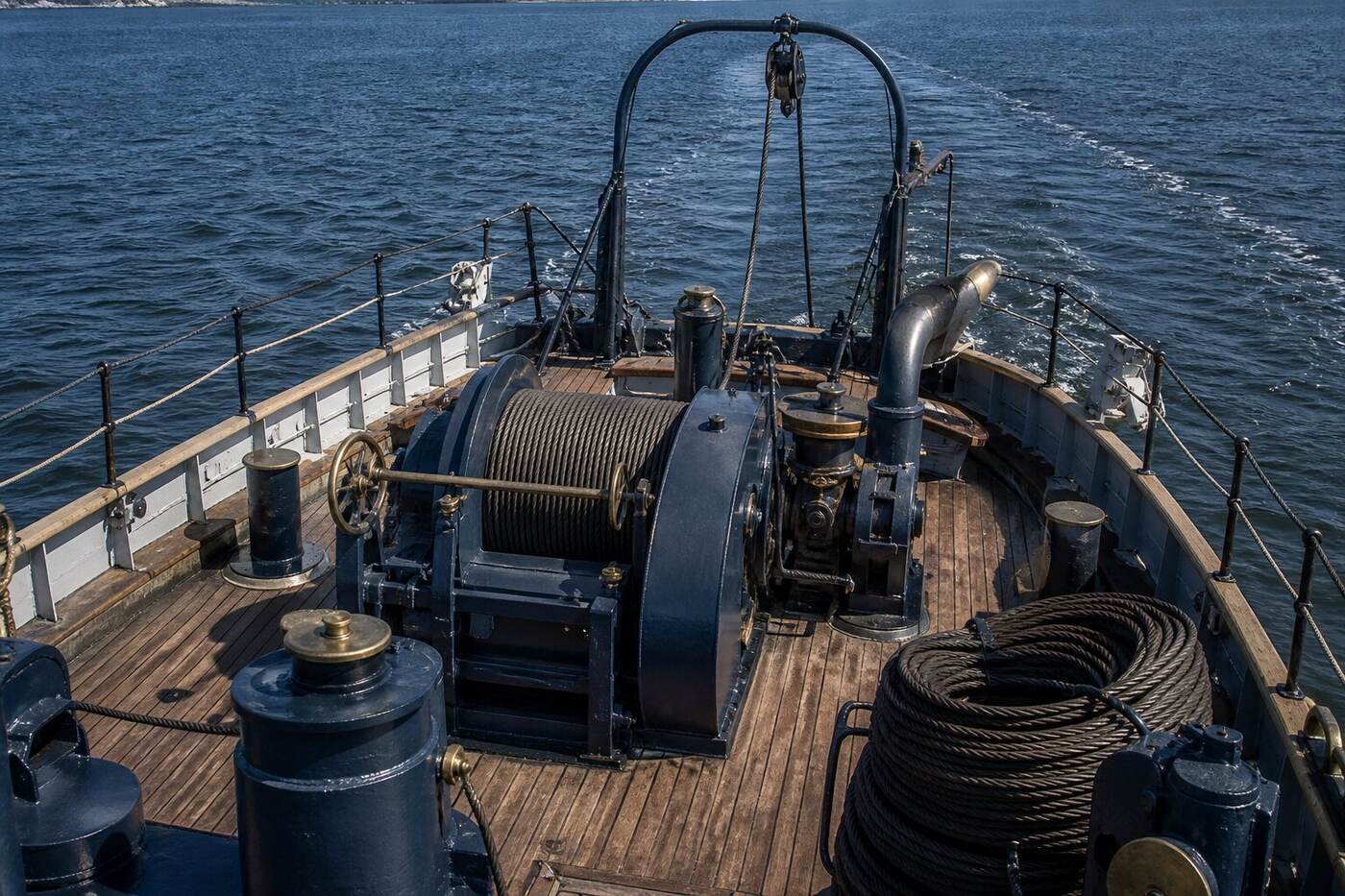
Read the deck as a workplace
The working deck explains more than a profile drawing. Look for where equipment can be handled, where lines can run and how people would move without crossing the sweep. Those observations connect technical design to the daily rhythm of a ship.
Keep specifications qualified
Official histories sometimes summarize a ship differently from later compilations. Where the records do not align, this desk keeps the versions separate and points the reader to the source rather than manufacturing a single confident number.
The published dimensions set the envelope
Phoebe's official summary lists 144 feet of length, a 28-foot beam and a 9-foot draft. Those figures describe a narrow working envelope. Crew circulation, machinery, stores, bridge functions and mine-warfare equipment all competed for space, while draft and handling had to suit coastal operations. A profile drawing alone cannot show how those demands met below deck.
The stated displacement of 320 tons and speed of 13 knots also suggest the priorities of the design. This was not a vessel built to win a speed comparison. Its value depended on reaching the assigned water, carrying specialized equipment and remaining controllable while work took place around the stern and sides.
A deck plan is a movement plan
When reading photographs, look for paths rather than isolated objects. Where could a line lead? Which areas needed a clear sweep? How did a sailor move between bridge, machinery spaces and working deck? These questions turn fittings into a plausible workflow without pretending that one exterior image reveals the full procedure.
A small crew amplifies every obstruction. The official complement of 39 provides scale but not a watch bill. Some people would be resting, maintaining equipment or performing other duties while an evolution took place. Design and personnel therefore have to be read together, with logs or manuals supplying detail that a general ship history does not contain.
Every advantage carries a cost
Shallow draft can improve access but may affect motion and capacity. A wood hull can reduce magnetic influence while demanding its own maintenance regime. Compact dimensions can aid maneuvering while limiting endurance and workspace. Good design history keeps both sides of each decision visible rather than turning a specification into an unqualified benefit.
This framework also prevents photographs from becoming technical proof. A fitting visible in one year may not have been present throughout the ship's career. Date the image, identify the component cautiously and look for plans, allowance lists or repair records before extending the observation to the whole service period.
Research worksheet
Put this method to work
A practical reading exercise is to annotate one broadside photograph with zones rather than component names: navigation, machinery, crew circulation, storage and working deck. Then compare those zones with the published dimensions and a dated image from another period. The exercise reveals how much remains hidden and where a plan would add value. It also discourages confident labels for objects that may be temporary gear, shadows or later alterations.
Continue the research
Follow the evidence into the next question
The hull material is examined in wooden minesweeper design.
See how work and space meet in the watchkeeping guide.
Use the photo identification checklist before assigning a fitting to a date.
Open the ateliers par age route.