Practice makes a system legible
A mine-warfare exercise is not just a rehearsal of movement. It is a way to test how ships, crews and commands share information while equipment is handled in a constrained environment.
Avoid the generic exercise story
A mention of an exercise does not prove a ship performed every role within it. The useful history names the event only at the level supported by the source and leaves the operational detail for a record that can carry it.
Look for repeated language
Exercise names, divisions and commands provide search vocabulary for later research. They connect a short ship summary to reports, logs and photographs that may sit in different repositories.
The official history names the partners
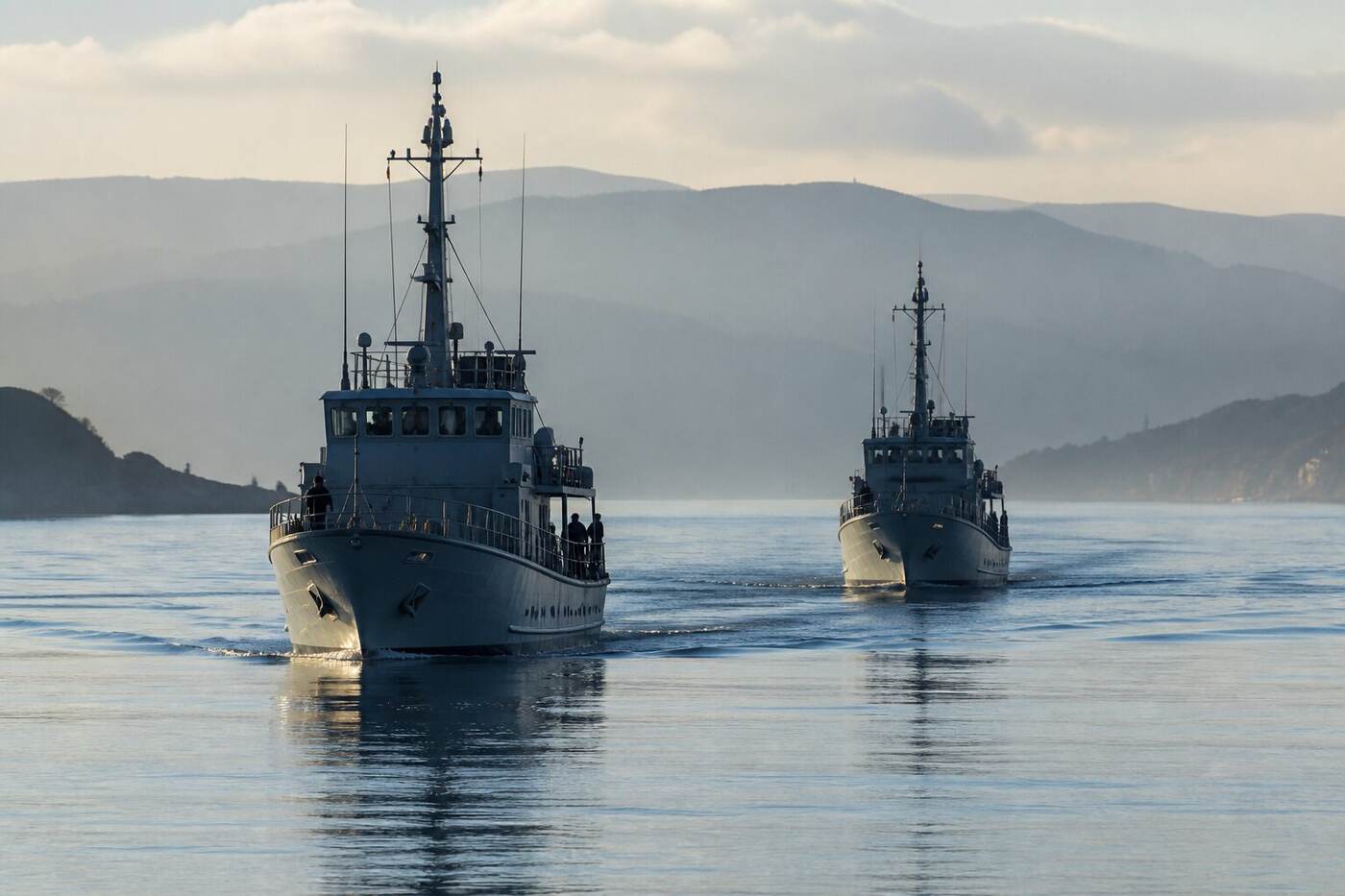
Phoebe's official history describes exercises with the Japanese Maritime Self-Defense Force, the Chinese Nationalist Navy, the Republic of Korea Navy and the Philippine Navy. That list establishes recurring multinational context. It does not state that every partner joined the same exercise or that Phoebe held the same role each time.
The record becomes more precise in 1968. It places Phoebe in a United States-Japan mine exercise in February and a United States-Korea exercise in November. Those entries can anchor research into exercise reports, command histories or photographs. They should not be expanded into tactical sequences until one of those records is found.
Exercises test more than ship handling
Mine warfare depends on shared definitions, signals, search areas and reporting. An exercise can reveal whether units identify the same contact, pass information in compatible forms and keep safe separation while specialized gear is in use. The value lies as much in coordination as in an individual ship's maneuver.
Different navies may also bring different equipment and procedures. A short official summary rarely records those details. The careful next step is to search by date, partner, command and exercise name, then compare the terminology used by each archive. Similar words do not always describe identical equipment or authority.
Keep participation proportional
A ship's presence supports the statement that it participated. It does not support claims that its crew led the exercise, introduced a method or achieved a particular result. Those are separate conclusions with a higher evidence burden. The distinction keeps a small vessel visible without turning it into the center of every operation it joined.
Exercise history is especially useful for connecting technical and diplomatic contexts. It shows why a Sasebo-based minesweeper appears alongside several allied services across the western Pacific. The article uses that supported relationship as the point of departure and leaves tactical reconstruction to dated reports.
Research worksheet
Put this method to work
An exercise research brief should begin with date, participating services, command and the exact wording that places Phoebe there. Only then should it ask about purpose, gear or outcome. Searching partner archives may produce a different exercise name or transliteration, so the brief should retain aliases without merging events prematurely. A confirmed shared date and location can link two records; similar subject matter alone cannot.
Continue the research
Follow the evidence into the next question
Place the exercises within the western Pacific route without inventing intermediate tracks.
The mission vocabulary is clarified in sweeping versus minehunting.
Return to the Sasebo base context to understand the regional setting.