Sweeping changes the problem
Minesweeping uses equipment and procedure to clear or neutralize a mine threat across an area. The exact method depends on the mine and the gear. The important point is that the ship is working through a field rather than simply searching for a single object.
Hunting is a search mode
Minehunting generally focuses on locating and identifying individual mines before disposal. The terms overlap in public discussion, but the difference matters when reading technical histories or comparing vessel roles.
Use the wording the source uses
Historical sources can describe older practices with different language. A glossary helps readers, but a page should preserve the source’s period terminology and explain it rather than silently modernizing every label.
Sweeping acts on a mine threat across an area
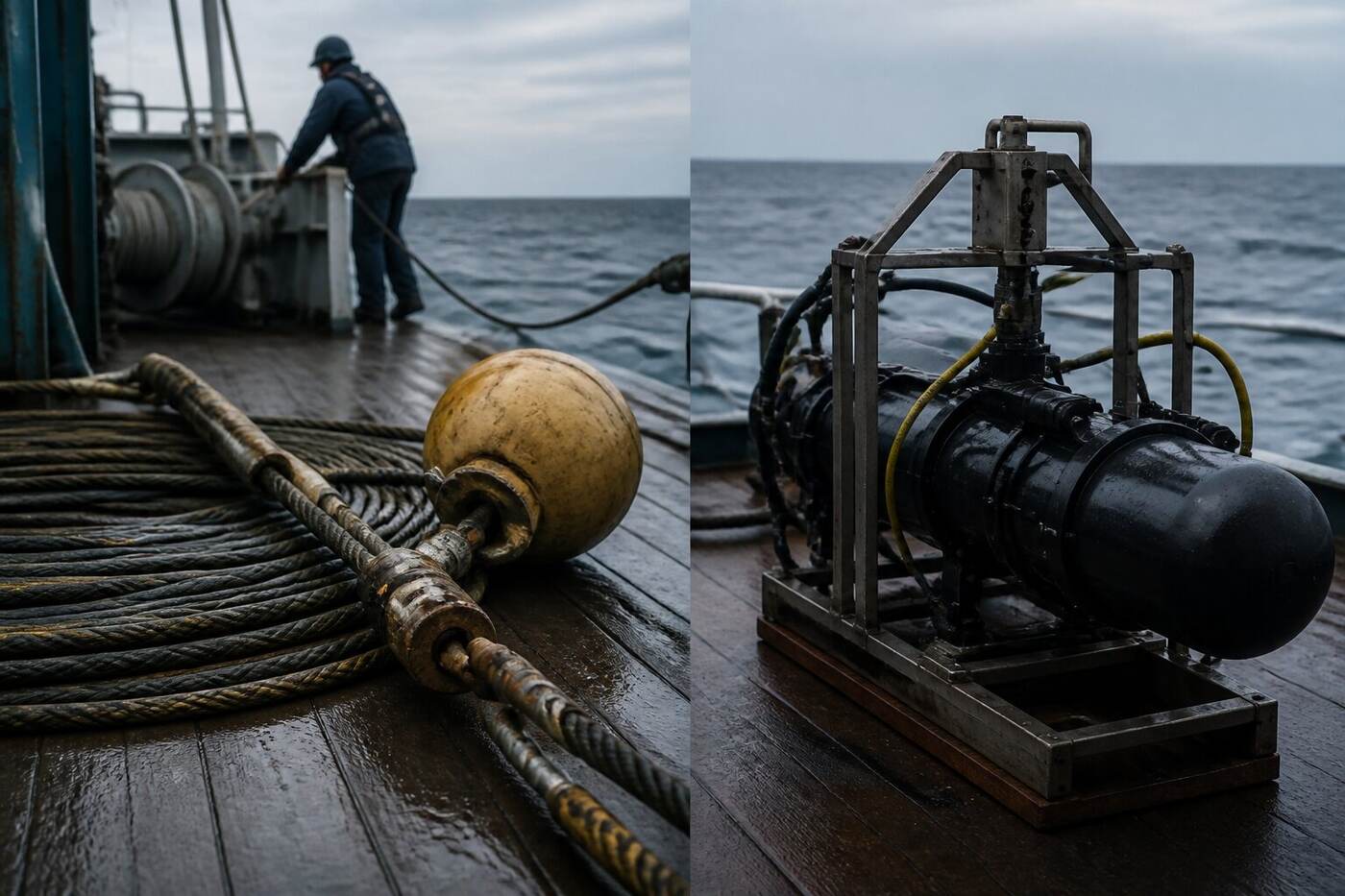
Minesweeping uses equipment and procedures intended to cut, trigger or otherwise clear mines according to the threat and period. The ship works a planned area or lane, often with specialized gear streamed behind or alongside it. The exact method cannot be inferred from the word 'sweep' alone.
Mechanical, magnetic and acoustic approaches address different triggering or mooring problems. Their names describe broad methods, not a guarantee of complete clearance. Sea state, navigation accuracy, mine settings, equipment limits and the need to repeat a track all affect what a sweep can establish.
Minehunting focuses on locating individual objects
Minehunting generally involves detecting, classifying and identifying mine-like contacts before neutralization. It relies on a search and decision process centered on individual objects. That differs from applying a sweeping influence or mechanical path across an area, even though a broader clearance operation may use both approaches.
Historical language complicates the boundary. Equipment, doctrine and classification changed over time, and a ship history may use a term differently from a modern technical summary. The article preserves the source's wording, explains the broad distinction and avoids assigning a modern capability to Phoebe without a period record.
Read the vessel and operation together
A coastal minesweeper's hull, speed, deck arrangement and signatures matter because they support the method. A wooden hull can reduce magnetic influence, but sweeping also depends on machinery, electrical practice, navigation and trained handling. No single design feature explains the mission by itself.
Phoebe's official history states that the ship practiced minehunting and mine-warfare tactics with the Seventh Fleet and joined allied exercises. It does not provide a technical inventory for every year. That supported language is enough to place the vessel in the field while leaving equipment-specific claims to plans, reports or manuals.
Research worksheet
Put this method to work
When an official source uses a mine-warfare term, capture the date and institutional context before replacing it with a modern synonym. Build a small concordance that links period wording to the publication's plain-language explanation. The source term remains searchable and quotable, while the reader receives a clear definition. This avoids the opposite errors of leaving jargon unexplained and silently modernizing the record until its original language disappears.
Continue the research
Follow the evidence into the next question
Match each method to the broad naval mine types it was intended to address.
See why material mattered in wooden-hulled minesweepers.
The allied exercise history shows how common procedures became an operational concern.
Use the forge and ironwork notes route.