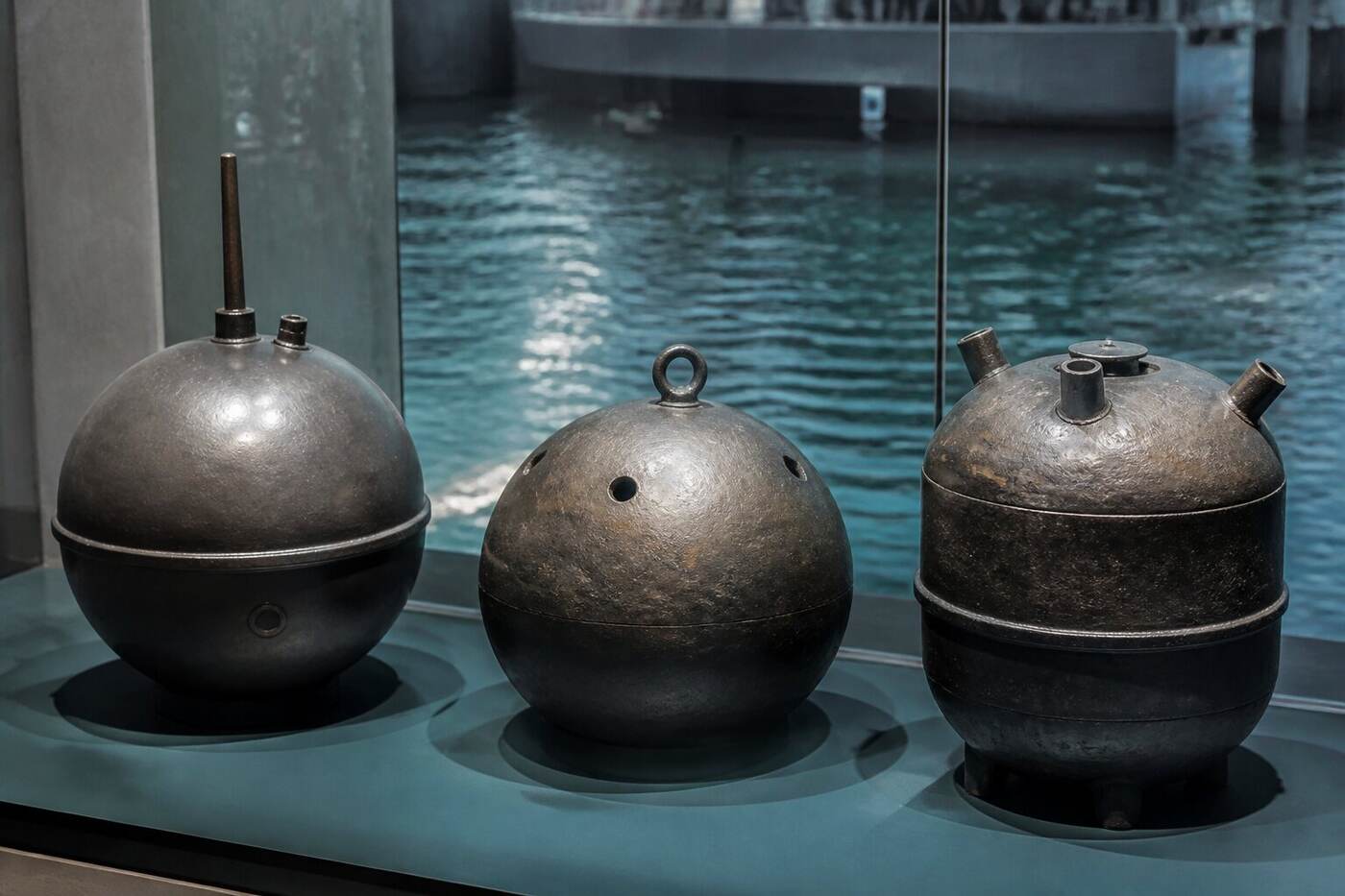
Contact is the visible baseline
A contact mine is triggered by physical contact with a vessel. It is the easiest concept to picture, but it is only one part of mine warfare’s technical history.
Magnetic and acoustic signatures
Magnetic and acoustic mines respond to characteristics associated with a passing vessel. That helps explain why materials, electrical systems, noise and operating procedure entered the design conversation.
Do not make the category do too much
The broad type is a starting point, not a complete technical specification. A reader researching a particular period should follow the official history and record series for that conflict or theater.
Contact mines depend on physical interaction
A contact mine is initiated through physical contact or a contact mechanism. Familiar photographs of moored spherical mines make this the most visible category, but shape alone does not establish the exact fuze, date or condition. Museum labels and period technical records remain necessary for a specific identification.
Contact threats help explain mechanical sweeping, in which gear can address moored mines or their connections. The broad principle is useful for readers, while operational details should remain at the level supplied by historical sources. A general diagram is not a procedure for handling a real object.
Influence mines respond to vessel signatures
Magnetic mines react to changes associated with a vessel's magnetic field, while acoustic mines respond to sound characteristics. These categories explain why minesweeper design paid attention to ferrous material, electrical systems, machinery noise and operating practice. A vessel could reduce a signature without eliminating it.
Some mines can combine influences or use settings more complex than a single textbook label. The plain-language categories are therefore a reading map, not a complete technical catalog. When a historical report names a specific mine or mechanism, its period wording and source should take precedence over a generic modern summary.
Position and purpose add another classification
Mines may be moored, rest on the bottom or occupy other positions according to design and environment. That physical placement affects detection and clearance, but it does not replace the contact or influence question. Two classification systems can describe the same object from different angles.
For ship history, the value of the taxonomy is explanatory. It shows why a wood hull, specialized gear and careful route planning belonged to one mission system. It does not prove which mine Phoebe encountered on a given patrol. That claim would require an operation report, log or technical record tied to the event.
Research worksheet
Put this method to work
A useful comparison table has separate columns for triggering idea, physical position, broad countermeasure concept, historical period and source. It should not include handling instructions or imply that a category identifies a real object safely. The table's purpose is historical literacy: it helps a reader understand why hull material, sound and electrical practice appear in ship design discussions and why one clearance method could not address every threat.
Continue the research
Follow the evidence into the next question
Compare responses to these threats in sweeping versus minehunting.
The magnetic question connects directly to wooden hull design.
Keep the period vocabulary close with the minesweeper glossary.
Use the tamburini organ stoplist route.