Late service is not an epilogue
A ship’s last documented period can reveal changes in assignment, readiness, classification or disposition. It belongs in the same chronology as construction and commissioning, not as a detached photo caption.
Date the image before naming the event
A photograph described as 1970-era may narrow the period without proving the exact day or location. Keep the supplied label visible and look for a catalog record, log or official summary that can carry a stronger claim.
Disposition closes one route and opens another
A final status can point toward inactive ship histories, registers and museum collections. The record may end without answering every personal question, but a clean endpoint is better than a dramatic one that is not supported.
The last supported operational setting
The Naval History and Heritage Command summary records Phoebe as still operating from Sasebo late in 1969. It follows the 1968 Market Time patrol and allied mine exercises, showing that the ship remained active in the western Pacific near the end of the published narrative. The summary does not provide a complete final-year log.
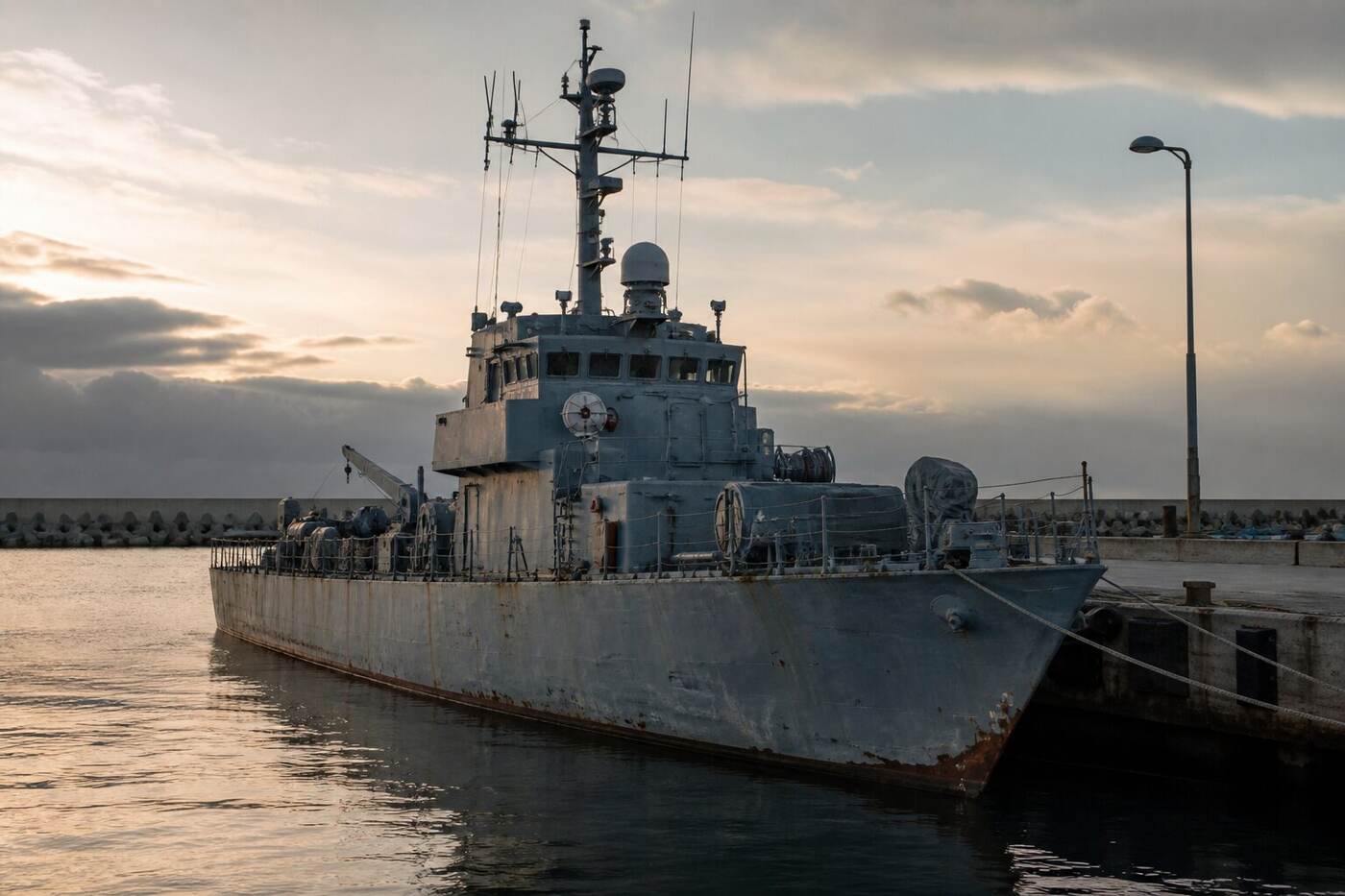
A photograph labeled '1970 era' is compatible with a late-service inquiry, but the phrase remains an attribution until the print, negative or caption can be dated. Equipment, paint and companions may narrow the range. None should be converted into an exact event without a record that joins the image to a date and place.
Service ending and disposal are different events
Decommissioning, removal from a register, transfer, custody and physical disposal can occur on different dates. A concise web summary may collapse them into one ending, but an archival timeline should keep each event type separate. This avoids using a scrap record to prove the date of a ceremony or an inactive status note to prove when the hull was dismantled.
The Naval Sea Systems Command inactive-ship history lists MSC 0199 Phoebe with a removal date of September 3, 1976 and the disposition 'scrap sale.' That supports the final disposal entry used here. It does not, by itself, establish every administrative milestone between the last operational reference and that removal.
Build the missing interval from dated records
Deck logs can refine movements while the ship remained in commission. Navy registers, disposition files and inactive-ship records can answer later administrative questions. Photographs and reunion memories can supply valuable context if their dates and sources remain visible. The interval should be built from those layers rather than filled with a dramatic closing scene.
A clean endpoint also improves the rest of the site. It prevents the service timeline from implying that silence after 1969 means immediate disposal, and it helps a reader understand why a 1970-era image and a 1976 scrap-sale record can both be relevant without describing the same event.
Research worksheet
Put this method to work
For the late-service interval, create separate rows for last operational reference, decommissioning evidence, register status, transfer or custody and physical disposition. Populate only the rows supported by a source. This structure prevents a single 1976 disposal entry from filling every blank after 1969. It also makes the research target concrete: a new record should answer one missing event rather than promise a complete dramatic ending.
Continue the research
Follow the evidence into the next question
See the endpoint in context on the service timeline.
Assess a late photograph with the photo identification guide.
Preserve material from this period through the small-ship archive checklist.