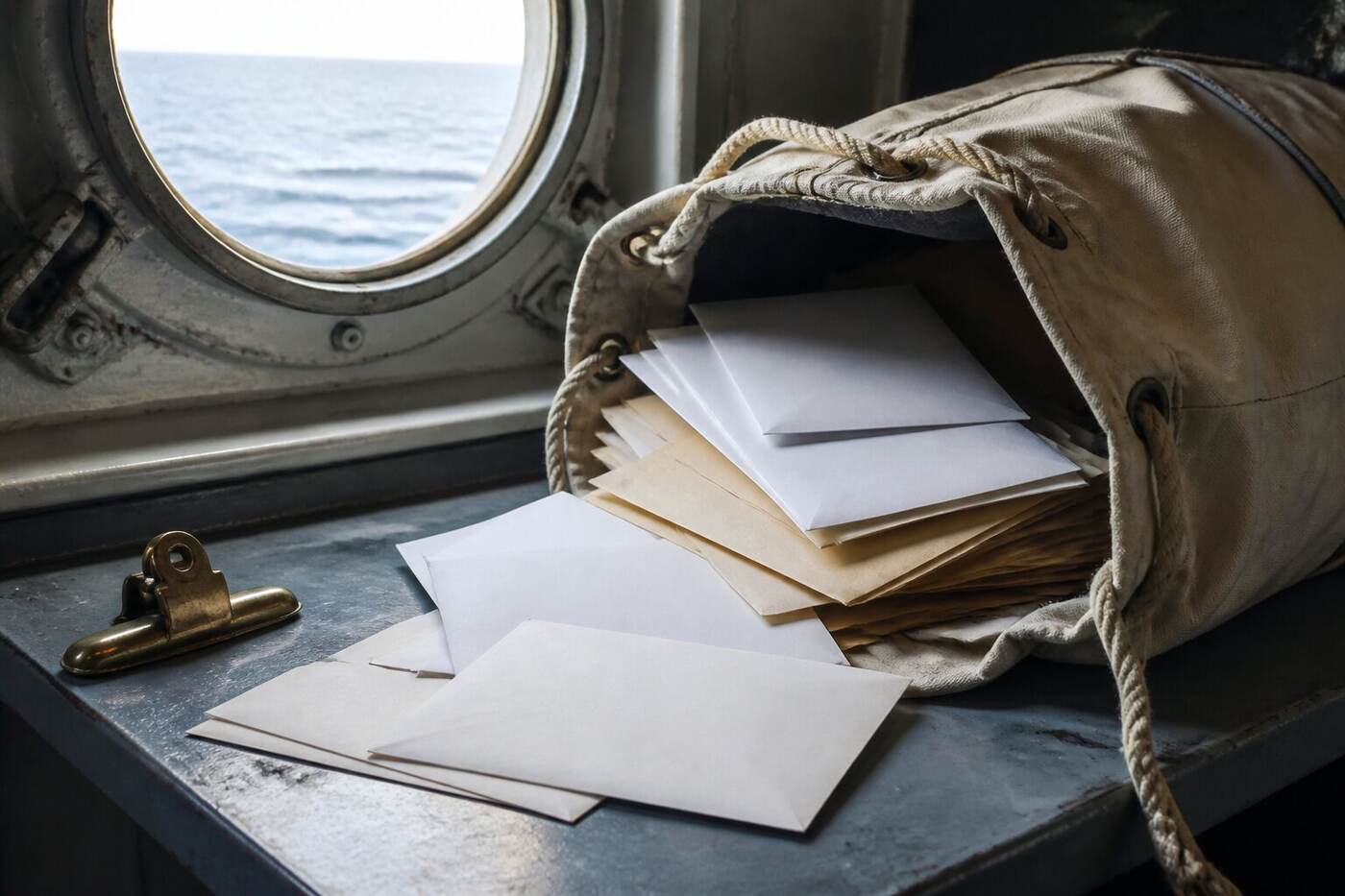
Ordinary routines are historical clues
Mail connects a ship to families, addresses, ports and time. A surviving envelope or note can therefore give a researcher a valuable date range, but it should not be treated as a complete account of a deployment.
Protect the private material
Family archives often contain living people’s names, addresses or personal messages. A useful research method records what the item proves while excluding unnecessary private details from a public page.
Let the artifact point outward
The best next step may be a muster roll, deck log or port record. The object is not an excuse to publish a directory. It is a bridge to a safer and more verifiable source trail.
Correspondence has more than one date
A letter may carry the date it was written, a postal cancellation, a receiving mark and a later family annotation. Those dates describe different moments. Recording each one prevents a delayed delivery from becoming an incorrect claim about the ship's position or the sender's assignment on the day a relative received the envelope.
The return address, unit notation and postmark can supply search terms, but they should be transcribed exactly before interpretation. A postal code or abbreviation may refer to a routing system rather than a physical port. The envelope and the letter also have separate evidentiary value, especially when one has been separated from the other.
Mail connects operations to family archives
Official histories describe assignments and movements at a high level. Personal correspondence may show how those periods entered ordinary family life, what news could be shared and which absences mattered. It remains one person's account, shaped by the intended reader and by what the writer was permitted or willing to say.
A muster roll can help check whether a named sailor was administratively attached to a unit around the relevant date. It does not prove authorship of an unsigned letter or establish the exact place where it was written. The comparison is strongest when names, dates and source custody are recorded without exposing private addresses.
Preserve the object before quoting it
Scan the envelope and every side of the letter, keep the original sequence and create a plain transcription that marks unreadable words. A decorative crop may work in an article, but it should never replace the preservation scan. File metadata should identify the owner, scan date, known writer and permission status.
Publication should be selective. A historically useful sentence can be quoted with permission while private family information remains closed. The old Mail Call route can therefore retain its place in the site's memory without becoming a public mailbox of names, addresses and intimate details gathered for a different audience.
Research worksheet
Put this method to work
A correspondence register should avoid publishing the contents by default. It can list archive identifier, writer, recipient relationship, date fields, broad location, physical format and permission status. A short subject note helps discovery without exposing private language. When a letter supports a historical claim, cite the identifier and describe the relevant evidence. This keeps the family archive searchable while allowing different access decisions for the envelope, transcript and original scan.
Continue the research
Follow the evidence into the next question
Check an assignment through the muster-roll method without publishing a roster.
Place personal correspondence beside the sea-story framework to keep recollection attributed.
The preservation checklist explains how to retain scans, custody and rights notes.
Open the subway poster campaign record route.