Three layers of attention
The museum overview gives readers an accessible way to see Market Time as a set of surveillance barriers. The useful insight is structural: the operation combined different platforms and viewpoints instead of asking one vessel to do every job.
Keep the scale visible
Operation-level statistics or descriptions belong to the operation, not automatically to Phoebe. A careful article labels the level of each claim so a reader can tell whether a sentence describes the broader force or the individual ship.
A research trail in plain sight
The official study is valuable because it points beyond a summary toward command files, messages, interviews and correspondence. It is a reminder that a short web page can be an index to deeper records when its sources are named.
The operation began as an information problem
Coastal surveillance had to detect vessels, decide which contacts deserved attention and pass information to a unit able to investigate. The official study's planning chronology in March 1965 shows that Market Time was organized as a coordinated response, not merely a new patrol route assigned to an existing ship.
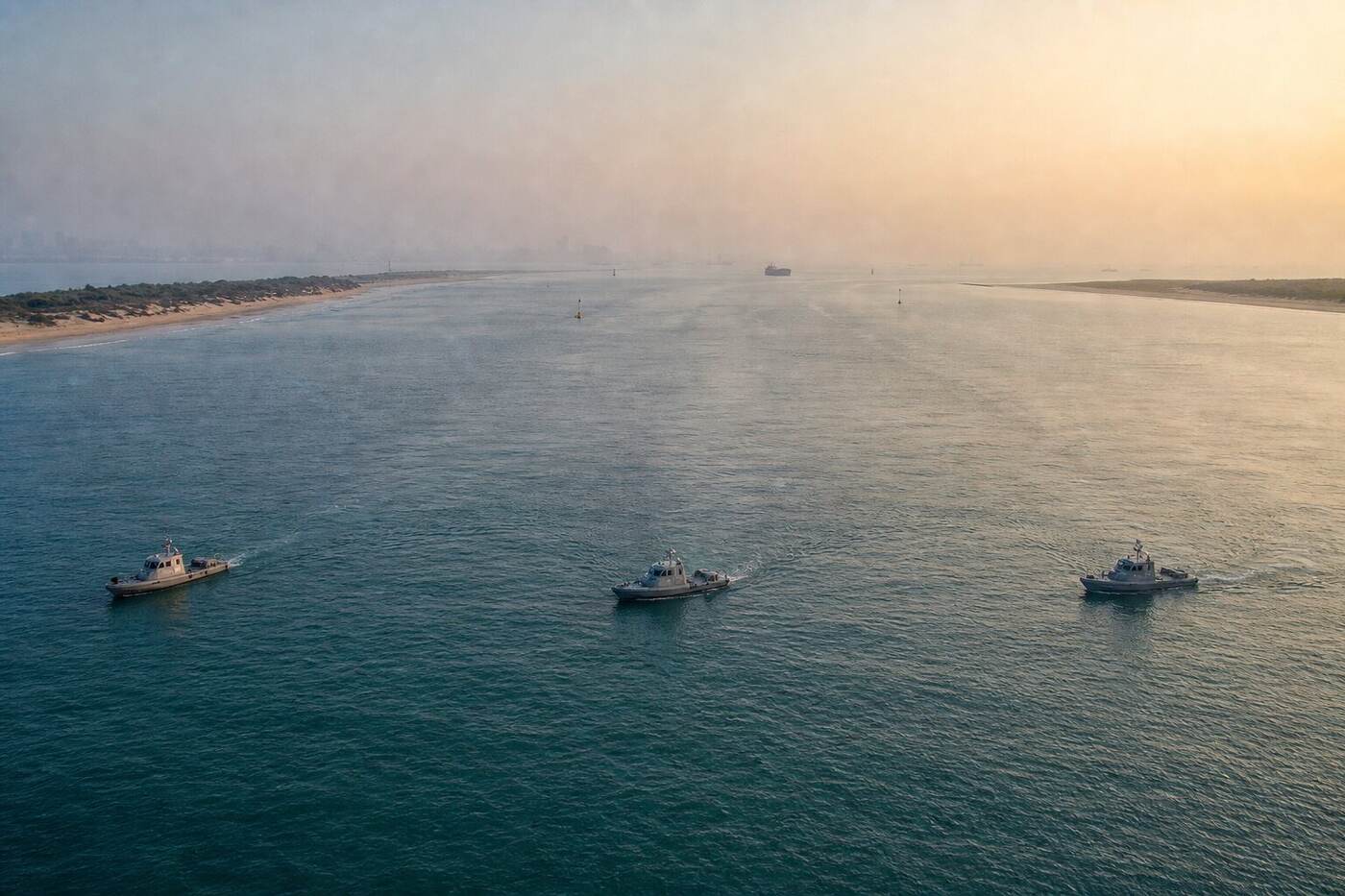
The barriers described in the historical record placed different platforms at different distances and tasks. Aircraft could search broad areas, larger ships could remain offshore and smaller craft could work closer to the coast. The arrangement changed over time as forces, bases and procedures developed. A single diagram should therefore be dated rather than presented as timeless.
Ship types did not have interchangeable roles
Early forces included destroyers and minesweepers; later descriptions also feature radar picket escorts, Coast Guard cutters and patrol craft. Size, endurance, sensors and draft shaped where each could work. A minesweeper's presence in the force does not mean it performed every boarding or every offshore surveillance task.
This distinction is useful when reading ship histories. An operation-level source can explain command structure and purpose. A vessel-level source must establish that a particular ship participated at a particular time. A log or action report is needed when the question narrows to a location, contact or individual evolution.
Read statistics at the correct scale
Market Time histories often contain impressive totals for sightings, boardings, traffic or distance. Before repeating a number, note whether it describes the entire operation, one task group, one period or one ship. Moving a figure down that hierarchy can turn a true statistic into a false claim without changing a single digit.
The Phoebe record offers a useful comparison because it supplies its own five-month duration, 24,000-mile distance and later count of 201 boarded junks. Those ship-specific figures can sit beside the system history as long as their dates and meanings remain explicit. The result is more informative than blending them into an anonymous total.
Research worksheet
Put this method to work
A clear operation diagram should identify the period it represents, the kinds of forces shown and the source used for each layer. It should avoid drawing every vessel at once or implying that a barrier remained unchanged throughout the war. The diagram is explanatory, not a tactical reconstruction. Readers can then understand why an offshore minesweeper, a patrol craft and an aircraft all appear in the same history without assuming they occupied the same place or performed the same task.
Continue the research
Follow the evidence into the next question
See the ship-level evidence in Phoebe on Market Time.
The service ledger keeps operation dates and vessel dates in separate rows.
For day-level evidence, use the Navy deck-log guide.